IP Folks
Prior-art search for inventors

Find out what’s already patented, before you file.

Describe your invention in your own words. We pull out its technical features for you to confirm, run several independent searches, and check every reference against the patent registers. You get a clear report to read, share, and take to your attorney.

Pay per reportNothing renews
Several independent searchesfor every report
Every reference checkedagainst the patent registers
Grouped by how closeRelevant, Related, Interesting
How it works

From an idea on paper to a search report.

No patent jargon needed to start. You describe it; the tool does the searching; you stay in control of what it searches for.

1

Describe it

Type a few paragraphs, fill in a short form, or upload your invention disclosure.

2

Confirm the features

We pull out its technical features. You correct them, so the search is aimed at the right thing.

3

We search

Several independent searches look for patents that come close, and each one found is checked in the register.

4

Read your report

On screen and as a PDF, grouped by how close each document is.

Why inventors use it

The hard parts of a prior-art search, and what we do about them.

Searching patents before you file is slow, full of jargon, and easy to get wrong. These are the things that tend to go wrong, and what IP Folks does about each.

The worry
What IP Folks does
“My idea is a sketch or a scan.”

Drawings and scans are read too

Upload your disclosure, scanned pages included, and attach drawings. The tool reads the figures, and what only a drawing shows is marked as implied.

“I describe what it does. Patents describe how.”

It searches on the mechanism

A benefit like “improved comfort” can’t be searched. Where your description supports it, the tool turns it into the arrangement that produces it, and keeps your own words.

“Did I describe it well enough?”

It tells you what it had to work with

Before anything is searched, the tool grades your description, says what a search on it can and cannot catch, and asks specific questions. If it is thin, you can answer them, fill in the full form, or go ahead anyway, and that choice is recorded.

“What did it actually understand?”

You see what it understood, and where it guessed

Each feature is marked as stated, implied or inferred, and anything the tool filled in is listed as an assumption. You correct it before the search runs.

“Is that patent number even real?”

Every reference is checked

Search tools can suggest patent numbers that do not exist. Every reference is looked up in the register before it reaches you, and anything that could not be confirmed is marked as such.

“Can I trust it with my idea?”

Your invention stays yours

Your disclosure is used only to produce your report — never to train AI models, and never for anything else. Delete it whenever you like, or set it to delete itself after 24 hours, 7, 30 or 90 days.

What it does not do: tell you whether you can get a patent. That is a legal judgement for a patent attorney. See what a search report cannot tell you ↓

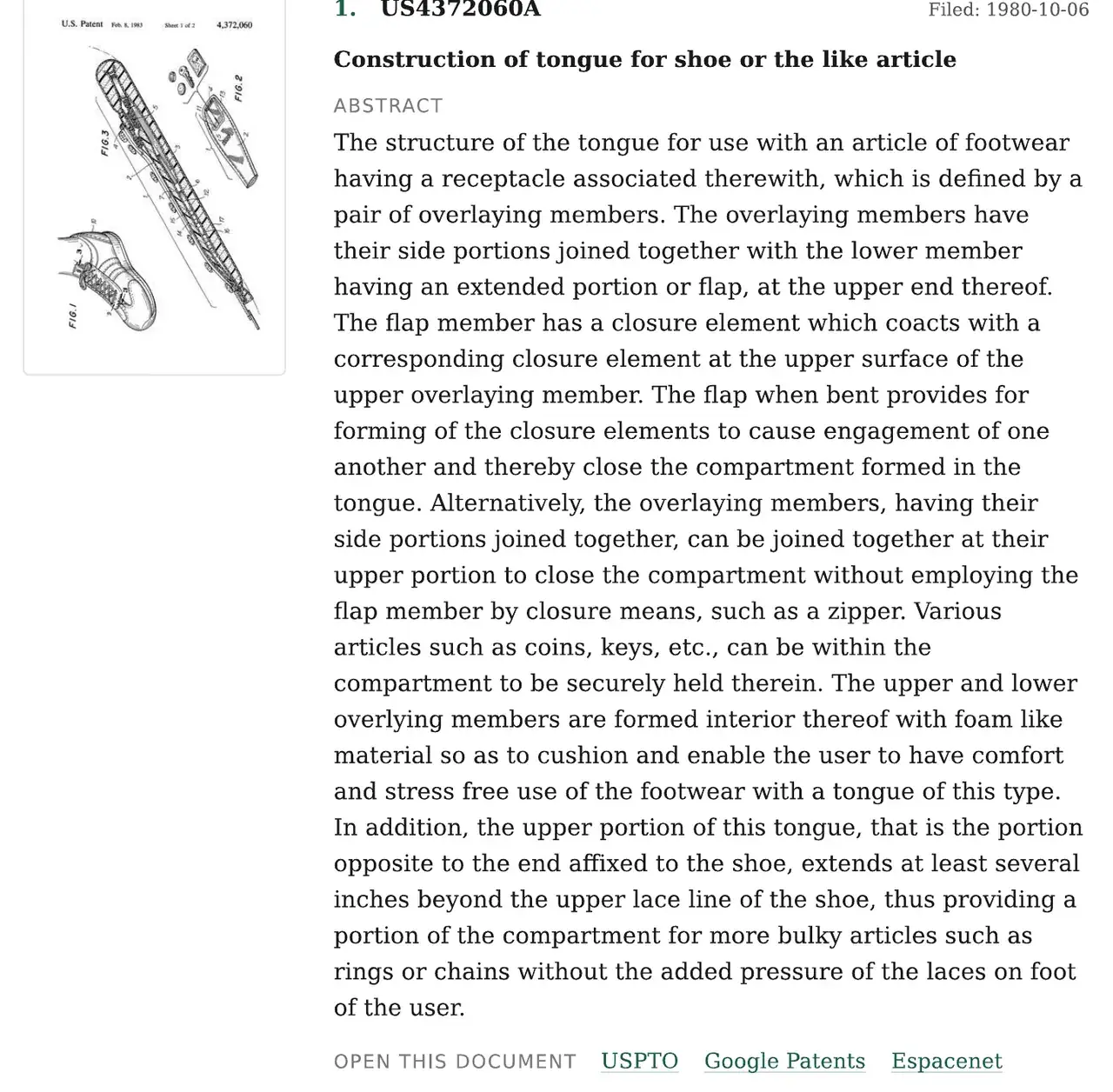
From a sample report.

Inside the report

A patent search report, on screen and as a PDF.

  • Your invention, as we understood itSo you can check the search was aimed at the right thing.
  • The features it was searched onThe ones you confirmed, in your own numbering.
  • Three groups of resultsEach document’s title, filing date and abstract, from the register.
  • See it, then open itA drawing from each document where one exists, and a link to the full text.
Pricing

Pay per report. Nothing renews.

No subscription and no card kept on file. What you buy stays on your account until you use it.

Patent Search Report
$49USD
One report

On screen and as a PDF.

Buy one report
Honest about its limits

What a search report cannot tell you.

Whether it is patentable

That is a legal judgement made by a patent attorney and, in the end, an examiner. This finds prior art; it does not weigh it for you.

That nothing else exists

Most applications stay unpublished for eighteen months, and much non-patent material is outside any register.

Freedom to operate

Whether you may make and sell something is a different search, against claims in force where you would sell it.

Questions

Before you start

Do I need to know patent language?

No. Describe your invention the way you would explain it to a colleague. The tool pulls out the technical features, and you correct them before anything is searched.

Is my invention kept confidential?

Yes. It is used only to produce your report and never to train AI models. You can delete it at any time, or set it to delete itself automatically. Our privacy notice lists who processes it and why.

Does a report tell me whether I can get a patent?

No. It shows you what has been published that comes close to your invention. Whether your invention is patentable is a legal judgement for a patent attorney.

When is a report counted?

When its analysis starts. Reading the same disclosure again, with your answers to the questions it asks, does not use another report.

More questions? See our Support page.

Start with your invention.

Describe it in your own words. You will be asked to sign in when you run the analysis.

Describe your invention